Dispatch No. 007 · Vol. 2026 · Mont Blanc approach · 2,400 m · Desk day · Desk research · Essential Survival
Ultralight Shelter Protocols for Alpine Conditions
How to split a shelter into a ground barrier, a weather shell, and insulation. The numbers are published product specs or a weather scale, not a personal test log.
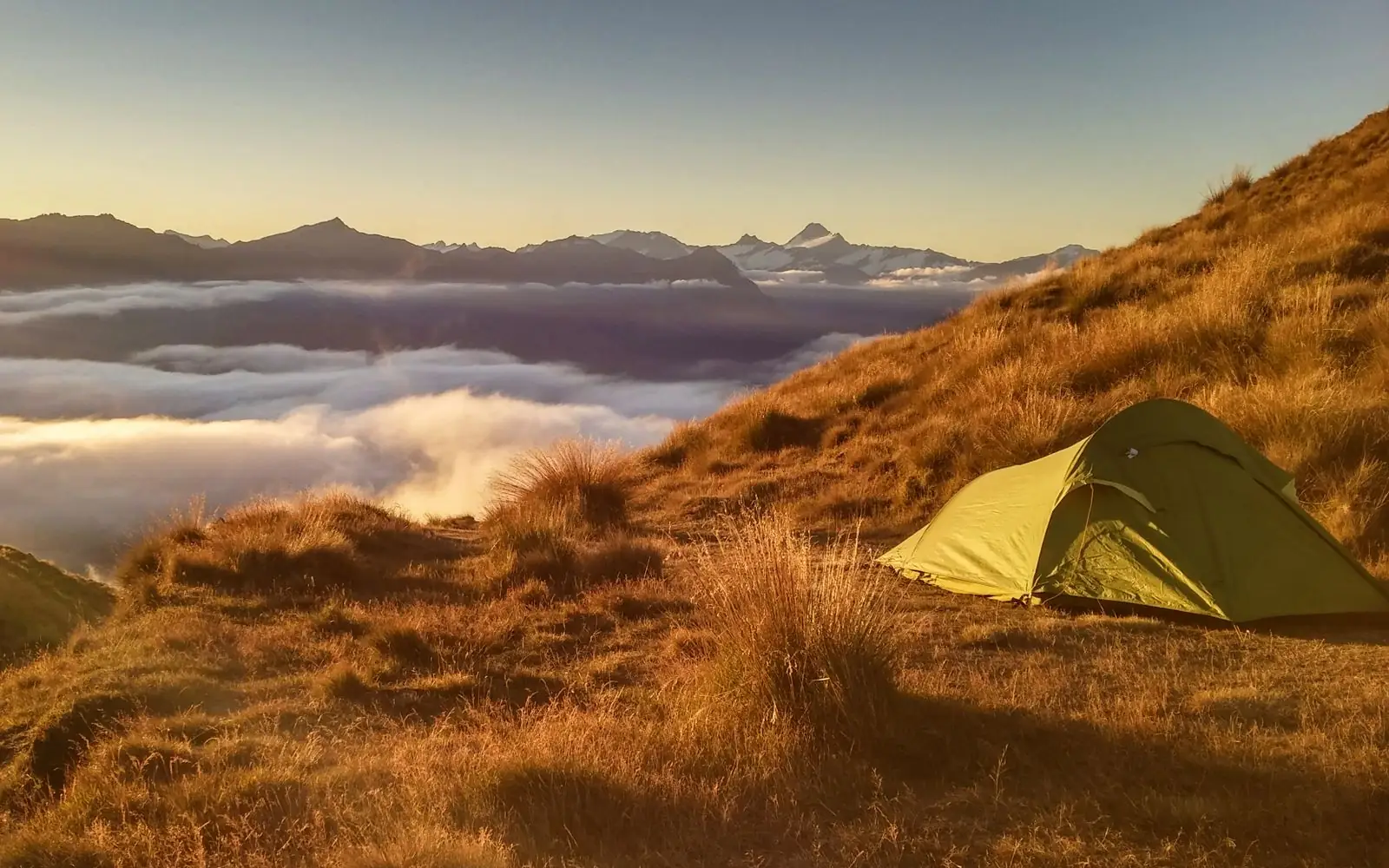
Three jobs, not one product
1. Ground barrier
- Tyvek sheet, cut to the footprint
- Closed-cell foam as a puncture-proof layer under an inflatable, or instead of one if a leak would end the night
Closed-cell foam is not the insulation pad. Do not give it the NeoAir weight or R-value.
2. Weather shell
The shell has to stay up in wind. On the World Meteorological Organization Beaufort scale, force 8 (gale) starts at 62 km/h. Above that, a three-season tent wants a sheltered pitch. This page does not cite a lab rating for a specific tent.
If you cannot pitch it in the dark in under a minute and a half, it is the wrong shelter for this protocol.
3. Insulation
Below 0°C, keep a dead-air gap between your body and the ground. The outfitter lists the Therm-a-Rest NeoAir XLite NXT for that job: published R-value 4.5, about 340 g. That figure is an inflatable pad, not foam.
No dated personal test is attached to this page. Weights and the R-value are the published figures used in the outfitter. The wind threshold is the Beaufort scale.
Map: Mont Blanc approach, 2,400 m. Fixed shelter: none. That is why the protocol is a shelter you carry.
Gear Matrix
Utility Index = (durability 1–10 × 10 × 1.15 if waterproof) ÷ kg. Higher means more durability per kilo. Not a safety rating.
| Item | Category | Weight | Utility Index | Brand |
|---|---|---|---|---|
| Tyvek Ground SheetCut to tent footprint, primary ground barrier | shelter | 120g | 766.7 | DuPont |
| Emergency BivvyRedundancy layer, always in pack lid | safety | 85g | 541.2 | SOL |
| Therm-a-Rest NeoAir XLite NXTInflatable insulation. Published R-value 4.5 at about 340 g. Not closed-cell foam. | shelter | 340g | 176.5 | Therm-a-Rest |
Trail Map
Coordinates for this report
Mont Blanc Approach
Difficulty: hard45.8326, 6.8652
- Elev.
- 2400m
- Water
- Yes
- Fixed shelter
- No