
Field Note: The Operator’s First Rule of Investing
Most of us are taught one thing about investing: give your money to someone else (like a bank), hope for the best, and maybe you’ll have enough to retire in 40 years.
This is a broken system. It’s a path that often leads to high fees, low returns, and a retirement funded by hope, not strategy. There is another way.
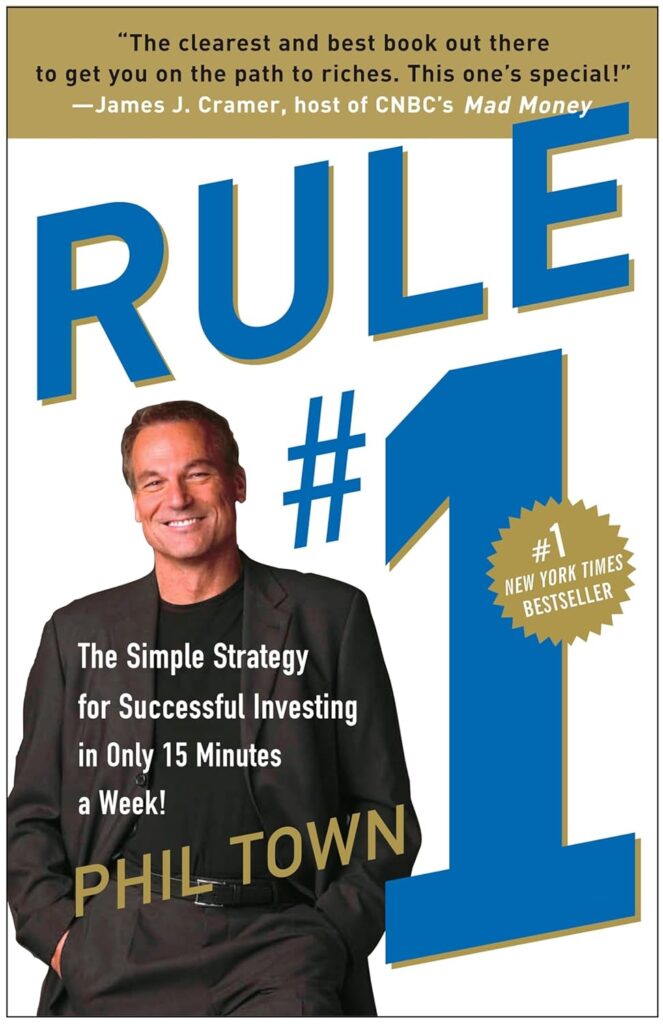
I learned it from Phil Town, a master instructor in the art of Rule #1 Investing—the same fundamental approach used by legends like Warren Buffett and Charlie Munger. This isn’t the theory they teach in business school; this is the practical, real-world playbook for taking control of your financial future.
A critical question on your financial journey is: who should manage your investments? For many people, working with a bank or a financial advisor is the right path. It’s a simple, hands-off approach that provides professional guidance, and for those who don’t have the time or interest to manage their own portfolio, it’s a solid choice.
The other path—the one we explore here—is the Operator’s Path: taking the responsibility to learn how to manage your own finances. It requires more work, more discipline, and a commitment to learning. But the reward is not just more control over your money; it’s the invaluable skill of knowing how to build and protect your own wealth. This guide is for those ready to take that step.
It all starts with one simple, non-negotiable rule.
The Philosophy: “Rule #1: Never Lose Money.”
That’s it. That’s the entire foundation, famously stated by Warren Buffett. Before you think about how much you can make, you must focus on how to not lose what you have. This forces you to be a disciplined, intelligent investor, not a gambler. You’re not “playing the market”; you’re buying wonderful businesses at a discount.
The Mission Briefing: Finding a Great Business (The 4 M’s)
To follow Rule #1, you need a strict set of criteria. You only invest in a business if it passes all four of these mission-critical checks: Meaning, Moat, Management, and Margin of Safety.
- Meaning: This is your circle of competence. Only invest in a business you truly understand and believe in. If you can’t explain what the company does and why it matters in a simple sentence, you have no business owning a piece of it.
- Moat: A great business has a “moat”—a durable competitive advantage that protects it from attackers. This could be a powerful brand (like Apple), a secret patent, high switching costs for customers, or a price advantage. The wider the moat, the safer your investment.
- Management: This is where you become a private detective. Is the CEO a visionary leader who is passionate about the business, or are they just a hired suit focused on their own paycheck? You need a management team you can trust to navigate the company through storms.
- Margin of Safety (MOS): This is the core of Rule #1. You determine what a business is truly worth (its “sticker price”) and then you wait patiently until you can buy it for at least half of that price—a 50% discount. Buying on sale is your ultimate protection against losing money.
Your First Mission: How to Start
- Gather Intel (Read the Manual): The best place to start is the book that this entire philosophy is based on: “Rule #1: The Simple Strategy for Successful Investing in Only 15 Minutes a Week!” by Phil Town. It breaks down this entire process in detail.
- Start Your Training (Paper Money): Do not start with real money. Open a brokerage account with a platform that offers “paper trading” (a practice account). TD Ameritrade’s “thinkorswim” is an incredibly powerful tool for this. Learn the game, practice finding companies, and build your confidence without risking a single dollar.
- Invest in Yourself: Taking responsibility for your own financial education is the greatest investment you will ever make. This is another stream of income, and more importantly, another path to freedom.
The journey to becoming a successful investor is a long climb, but it begins with the discipline to follow a proven system. Take control of your finances. This is how you win.
Leave a Comment